
Espresso
- ratio
- 1:2
- time
- 25-30 sec
- grind
- Fine
Intense, concentrated shot. The foundation of milk-based drinks.
From Bean to Brew: Your Journey Through Coffee Excellence
A journey through time from ancient Ethiopia to your cup
Legend tells of Kaldi, an Ethiopian goat herder around 850 AD, who discovered coffee when his goats became unusually energetic after eating berries from a mysterious plant. Curious, he tried the berries himself and experienced newfound alertness.
The coffee plant originated in the ancient forests of the Ethiopian highlands, where wild coffee trees still grow today. Local monks began brewing the berries to stay awake during long hours of prayer.
From Ethiopia, coffee spread to Yemen in the 15th century, where Sufi monks cultivated it for their night-time devotions. Yemen became the world's first coffee exporter, shipping beans from the port of Mocha.
The Arab world embraced coffee, establishing the first coffee houses (qahveh khaneh) in Mecca around 1511. These became centers of social activity, earning the nickname 'Schools of the Wise'.
By the 17th century, coffee houses flourished across Europe. In London alone, over 300 coffee houses operated by 1675, becoming centers of intellectual exchange and business dealings.
Today, the specialty coffee movement honors these traditions while pushing the boundaries of quality, sustainability, and flavor exploration. Coffee unites over 2 billion cups consumed daily worldwide.
Coffee thrives in the 'Bean Belt' between the Tropics of Cancer and Capricorn, where climate, altitude, and soil create unique flavor profiles.
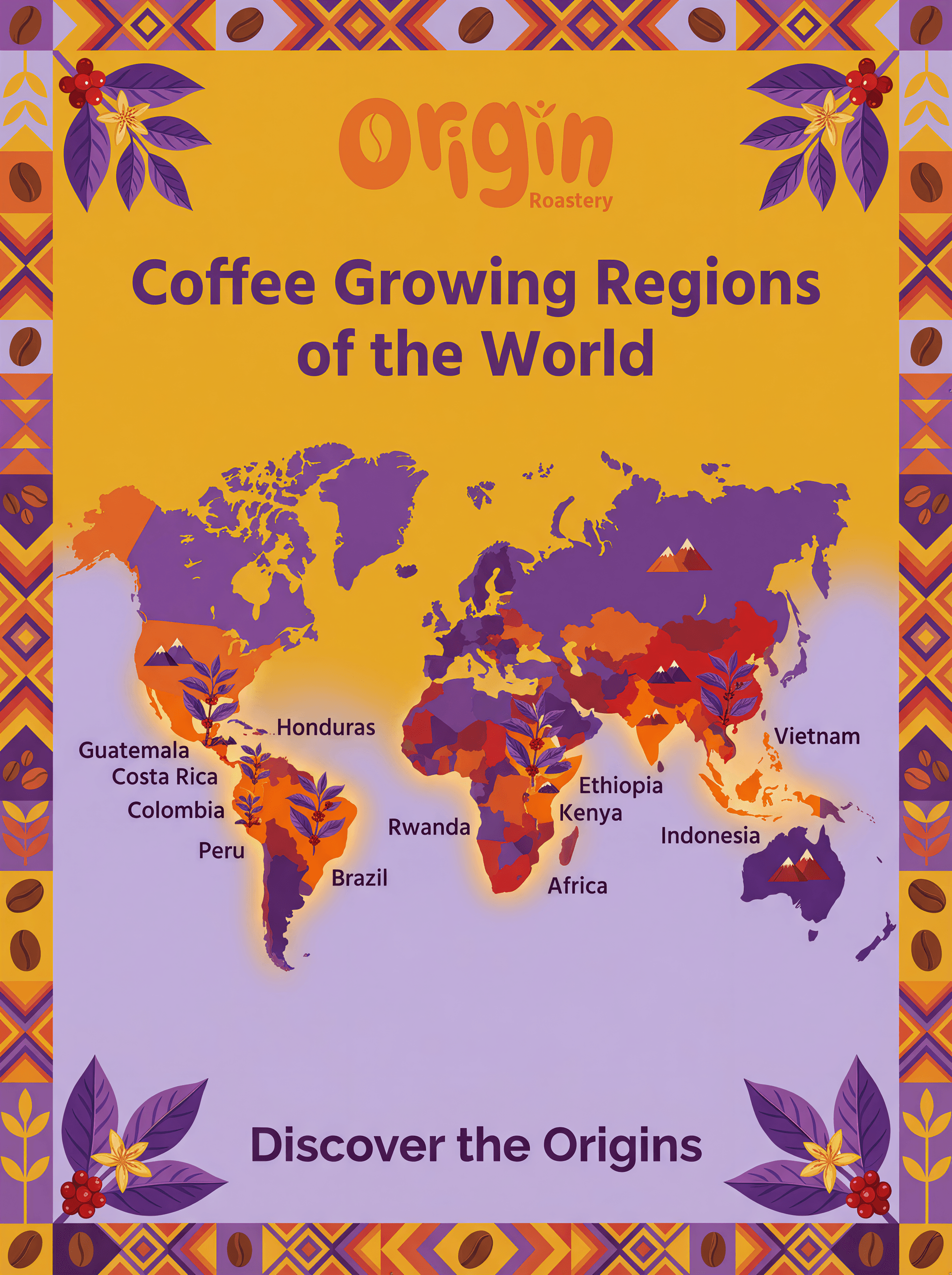
Chocolate, nuts, citrus brightness
Bright acidity, clean, honey sweetness
Well-balanced, caramel, fruity undertones
Mild body, nutty, chocolate finish
Sweet, fruity, caramel notes
Nutty, chocolate, low acidity
Floral, citrus, tea-like delicacy
Floral, berry, wine-like complexity
Bright, tomato, blackcurrant
Bold, earthy, dark chocolate
Earthy, spicy, full body
Transforming green beans into aromatic coffee through precise heat and timing
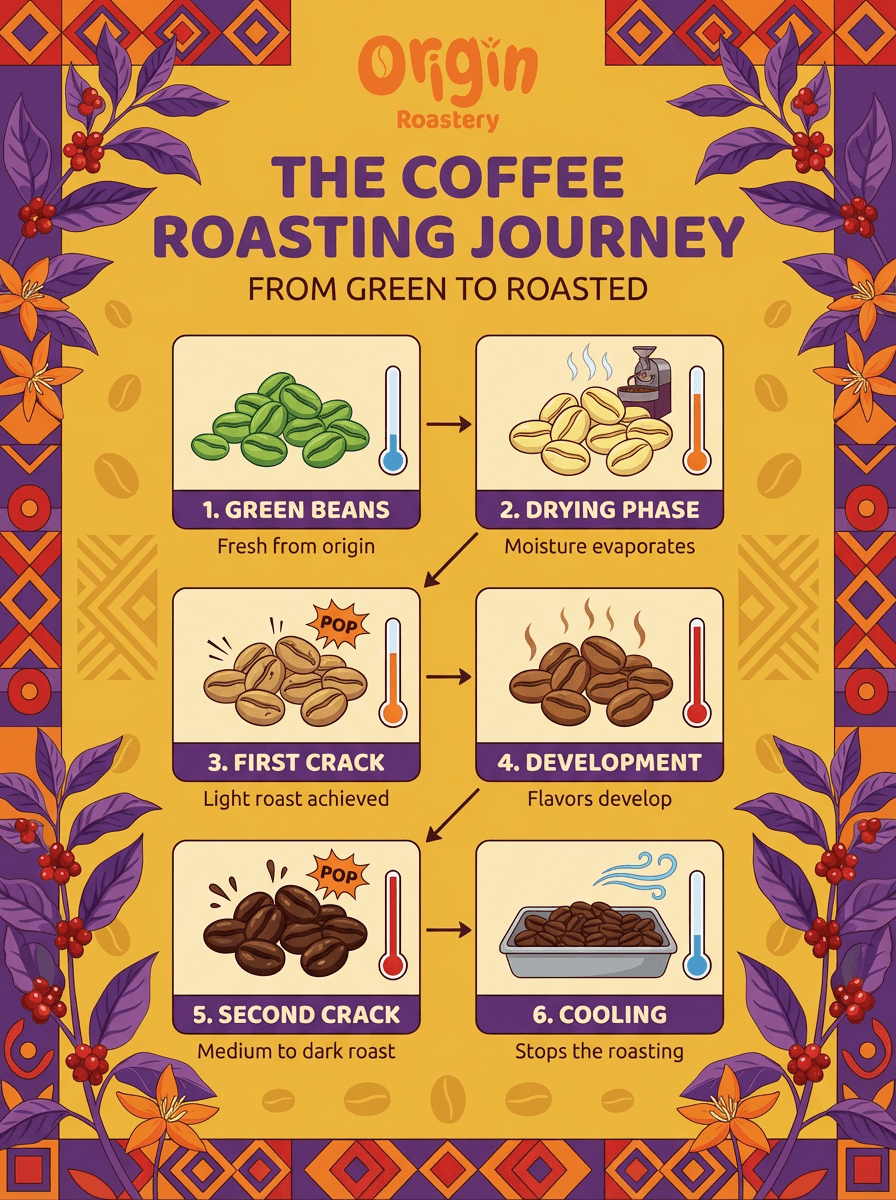
Raw beans with grassy, hay-like aroma. The starting point of every great roast.
Moisture evaporates, beans turn yellow. The foundation of flavor development.
Beans expand and crack audibly. Light roast territory begins here.
Sugars caramelize, flavors develop. The roaster's art is crucial here.
Oils emerge on surface. Dark roast characteristics develop.
Quick cooling locks in flavors and stops the roasting process.
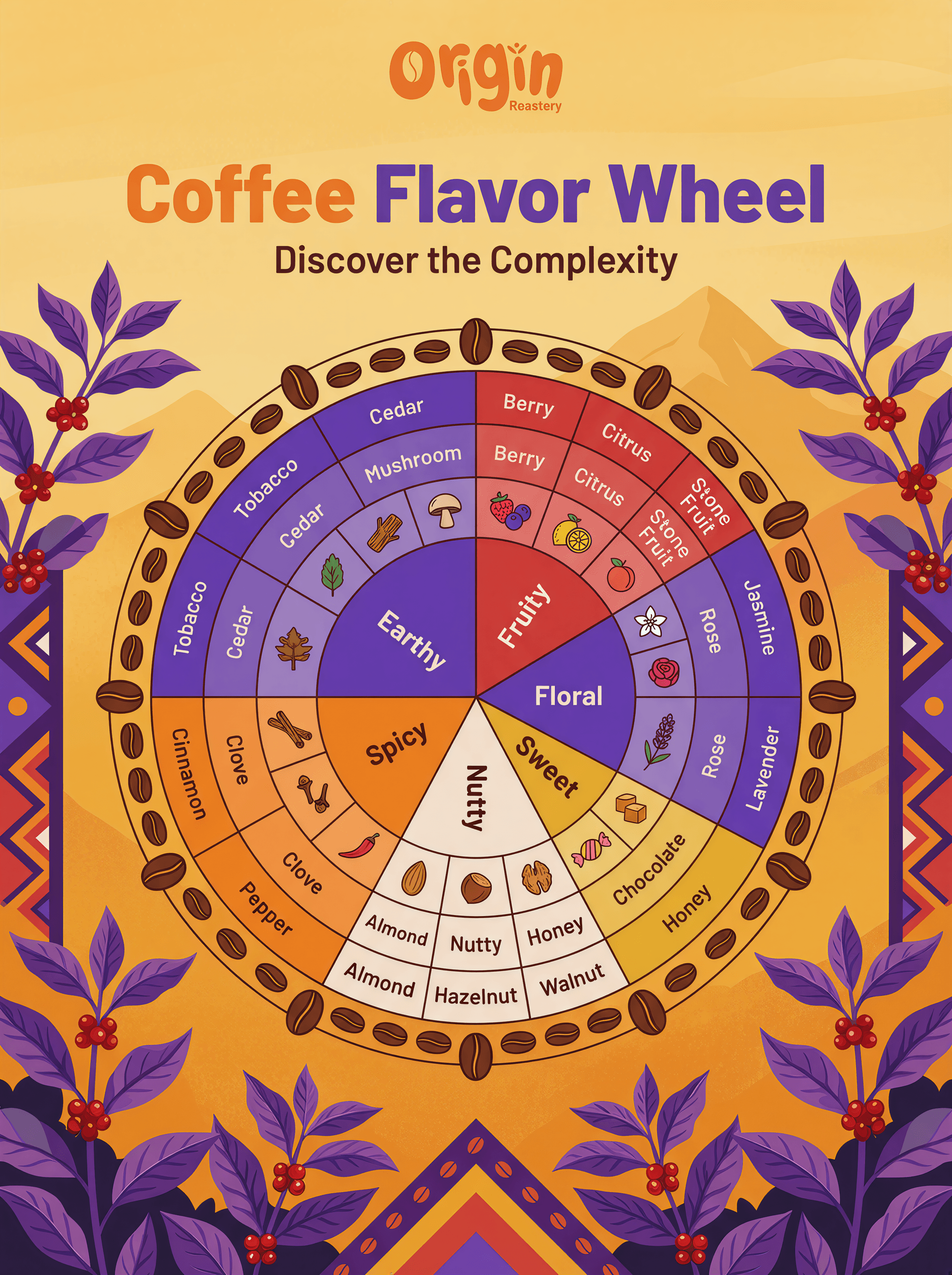
Understanding the complex world of coffee flavors and aromas
Coffee contains over 1,000 aromatic compounds - more than wine. Learning to identify flavors transforms your coffee experience.
Berry, citrus, stone fruit, tropical
Jasmine, rose, lavender, chamomile
Caramel, honey, chocolate, vanilla
Almond, hazelnut, walnut, peanut
Cinnamon, clove, pepper, cardamom
Tobacco, cedar, mushroom, leather
Each method brings out different characteristics of your coffee. Find your perfect brew.
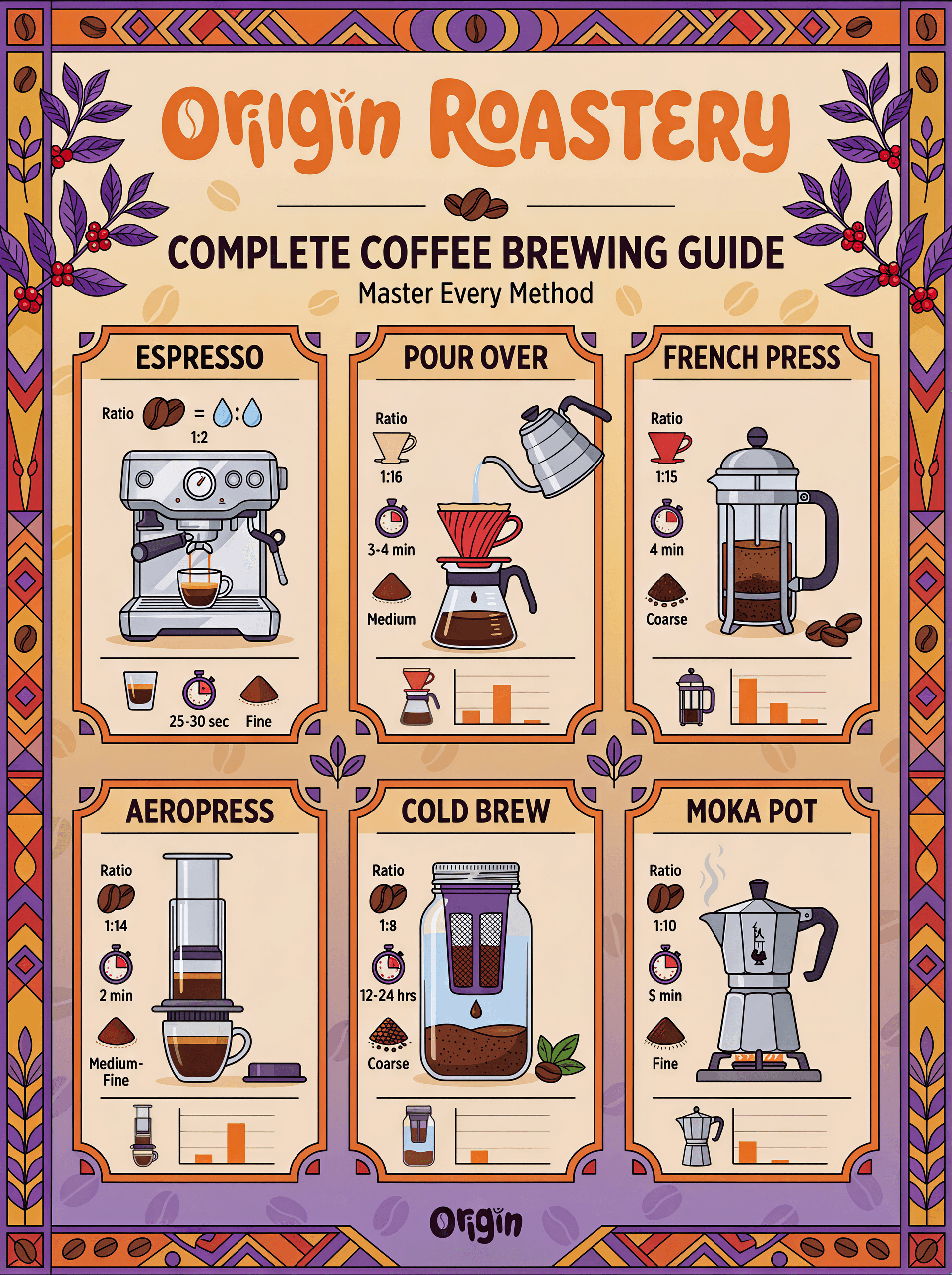
Intense, concentrated shot. The foundation of milk-based drinks.
Clean, bright, nuanced. Highlights single origin flavors.
Full body, rich oils. Classic immersion brewing.
Smooth, versatile. Perfect for travel and experimentation.
Sweet, low acidity. Smooth summer refreshment.
Strong, stovetop espresso-style. Italian tradition.
Perfect timing for perfect coffee
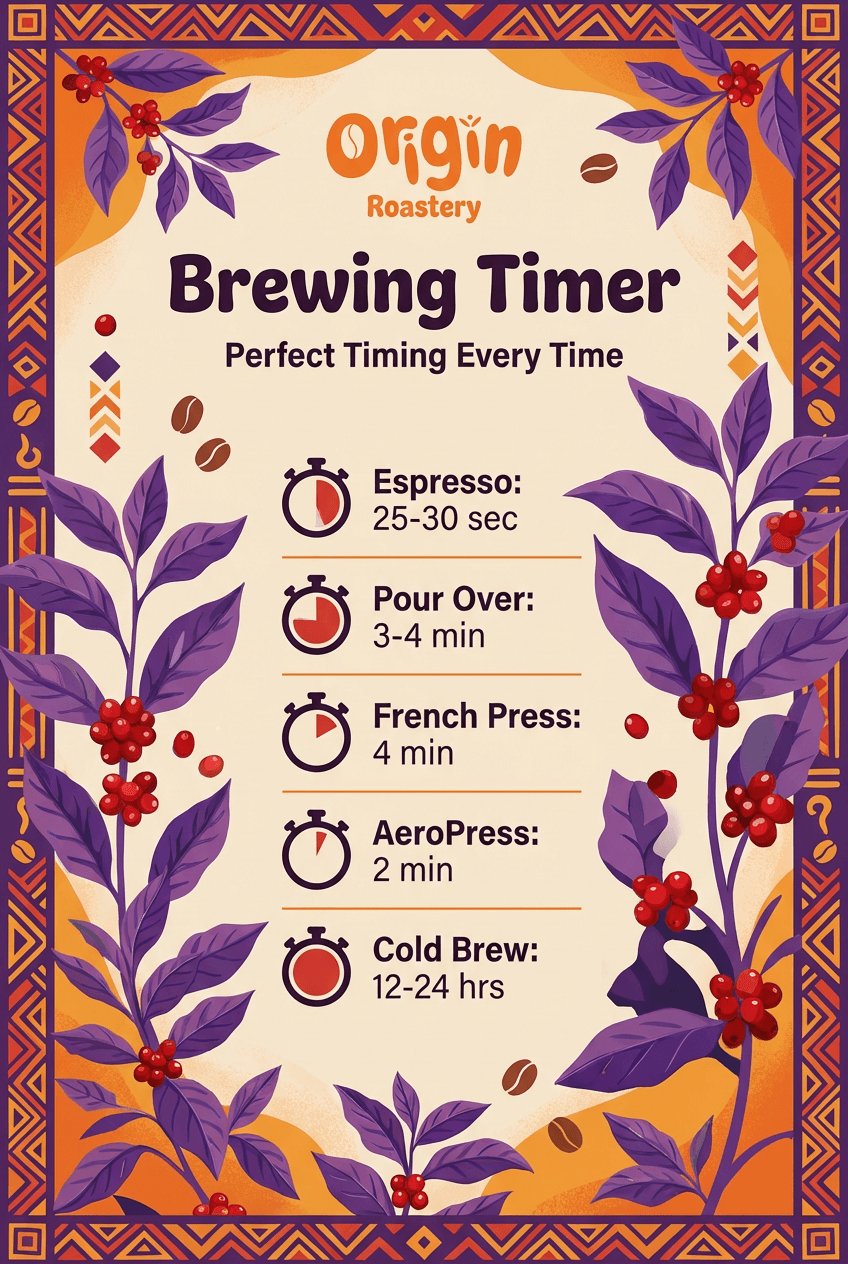
Use filtered water at 92-96°C (197-205°F)
Match grind size to your brew method
Best within 2-4 weeks of roast date
Start with 1:16 (coffee to water) and adjust to taste
Now that you know the journey from bean to cup, taste it for yourself.